Father's grand design
Easter is the celebration of the most consequential event in human history: the Resurrection of Jesus Christ. This event represents the victory of life over death and the fulfillment of Heavenly Father's plan of happiness.
Easter arrives each spring draped in a quiet reverence, a solemn reminder that the most pivotal moment in human history unfolded not amid triumphal fanfare but within the shadow of a hill called Golgotha. The crucifixion, a scene of broken bodies and quiet cries of grief, carries the weight of all the pain that people have ever felt: betrayal, abandonment, and even death itself. Yet beneath that darkness flickers a fragile, trembling hope: the Resurrection. In the empty tomb, the stone rolled aside like a sigh released from a weary heart, and we witness life daring to rise over death, a promise that the grief that binds us is not the final word. This triumph, while radiant, is tinged with the lingering ache of loss, for it is only through the depth of the abyss that the ascent can be measured. In the melancholic hush of Easter morning, believers sense the gentle fulfillment of the Heavenly Father's grand design—a plan that weaves sorrow into a tapestry of enduring joy, inviting us to linger in the bittersweet beauty of a love that conquers even the night.
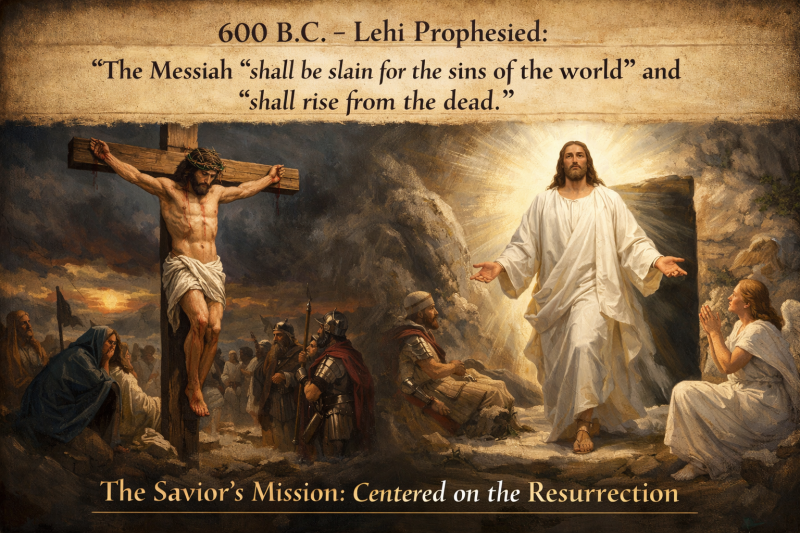
- The Mission of the Savior: Jesus Christ, the Only Begotten Son of the Father, was chosen in the premortal life to be the Savior. He inherited the capacity to die from His mortal mother, Mary, and the power to live forever from His immortal Father.
- The Atoning Sacrifice: The meaning of Easter encompasses the Savior's suffering in the Garden of Gethsemane, where He took upon Himself the sins and pains of all mankind. This sacrifice continued on the cross at Calvary, where He "was pierced for our transgressions" (Isaiah 53:5).
- The Physical Resurrection: On the third day, Jesus rose from the tomb with a glorified, perfected body of flesh and bones. He invited His apostles to "handle me, and see; for a spirit hath not flesh and bones, as ye see me have" (Luke 24:39). This physical reality provides the knowledge that Heavenly Father likewise possesses a tangible body.
- The Universal Outcome: Because of the Resurrection, physical death is not the end. "For as in Adam all die, even so in Christ shall all be made alive" (1 Corinthians 15:22). Every soul who has ever lived will be resurrected, with their spirit and body inseparably reunited in a perfect form.
- The Knowledge of Eternal Life: Beyond universal immortality, Easter offers the opportunity for eternal life—living in the presence of Heavenly Father—to those who repent and obey the commandments. This knowledge provides hope and peace, ensuring that "the grave has no victory" (1 Corinthians 15:55).
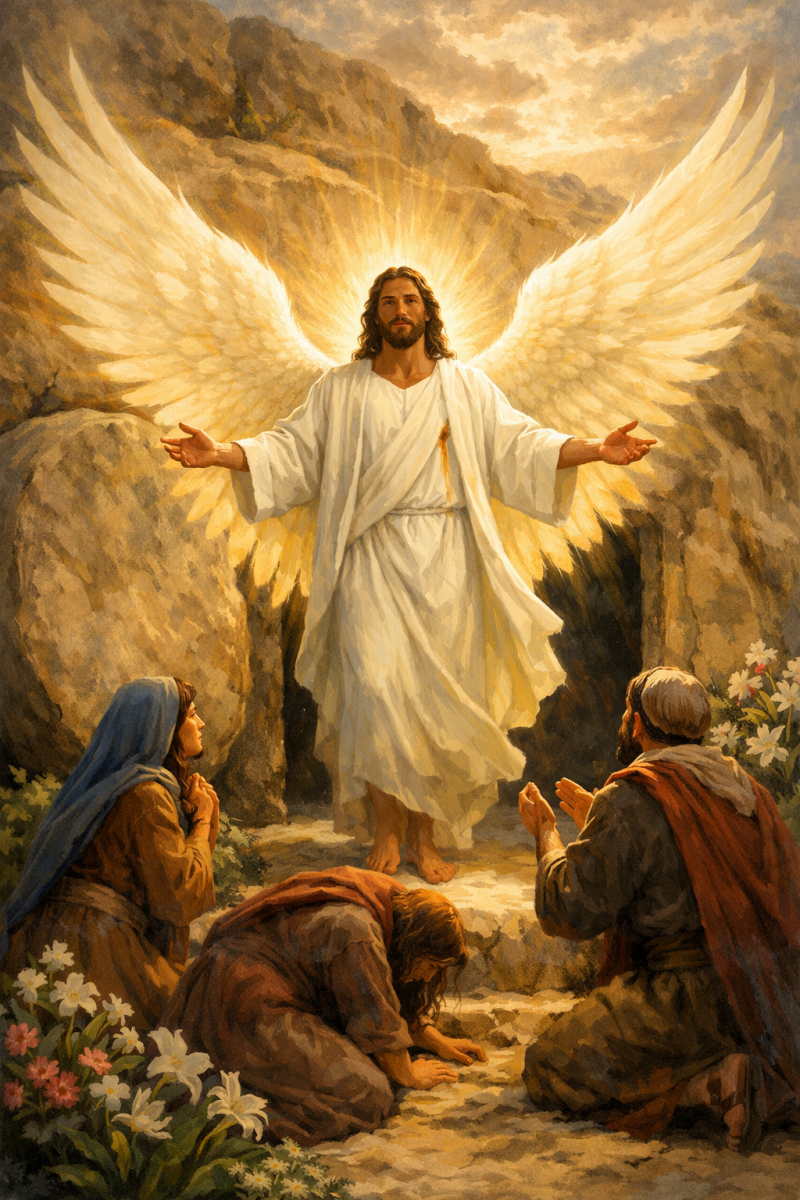
The Resurrection is not merely an ancient miracle but an objective truth that validates Jesus Christ's authority to grant forgiveness and reconcile humanity with Heavenly Father. Any Criticaster who doubts the literal nature of this event ignores the infallible proofs provided by the many witnesses who saw and felt the risen Lord.
The New Testament provides multiple specific accounts of those who gained knowledge of the resurrected Lord through direct physical experience and spiritual witness. These accounts establish that Jesus Christ is a living being with a perfected body of flesh and bones.
- Mary Magdalene and the Women: Mary Magdalene was the first to see the resurrected Savior outside the tomb. She initially believed Him to be the gardener, but He confirmed her knowledge when He called her name. Other women, including
Mary, the mother of James and Salome, also saw Him and "held him by the feet, and worshipped him" (Matthew 28:9).
- The Two Disciples on the Road to Emmaus: While traveling, two disciples were joined by the Savior, though their knowledge of His identity was temporarily withheld. As He broke bread with them, "their eyes were opened, and they knew him" (Luke 24:31). They later testified that their hearts "burned within" them as He spoke.
- The Eleven in Galilee: On a mountain in Galilee, the eleven apostles saw Him and received the Great Commission to teach and baptize all nations (Matthew 28:16-20).
- Paul on the Damascus Road: Though it occurred after the Savior’s ascension, The Five Hundred Witnesses: The Apostles in the Upper Room: Jesus appeared to the ten apostles (Thomas being absent), inviting them to "handle me, and see" to prove He was not a spirit but had "flesh and bones." He further confirmed His physical reality by eating a piece of broiled fish and a honeycomb (Luke 24:42-43).
The Apostle Paul recorded that the resurrected Lord was seen by "above five hundred brethren at once," most of whom were still living at the time of his writing to provide their own testimony
Thomas was present. He invited Thomas to reach his finger into the nail prints in His hands and thrust his hand into His side. Thomas responded with the certain knowledge, "My Lord and my God" (John 20:28). -
The Apostle Thomas: Eight days later, the Savior appeared again when
-
Paul gained a literal knowledge of the resurrected Christ during his experience on the road to Damascus (Acts 9:3–6), which transformed him from a persecutor to a dedicated witness.

The pages of the Book of Mormon unfold a sorrow-laden tableau of a world still trembling from the shadows of death, yet brightened by a single, miraculous visitation. In the twilight of their struggles, the people of the ancient Americas see the risen Savior. His wounds still shine with the pain of crucifixion, and his eyes are full of the tender pity that only someone who has conquered death can have. This physical, palpable appearance is not a mere footnote to an already‑told gospel; it is a second, solemn witness that the victory over death is not confined to a distant shoreline but stretches across the continent, reaching the far‑flung children of Heavenly Father whose cries echo through the canyons of time.
This story is sad because it reminds us how thin the veil of death really is and how weak our hopes have seemed in the face of constant sadness. Yet, within that same mournful realization, the narrative swells with an aching universality: the Savior’s love does not shrink to a single nation or a single language but expands—like a balm over a broken world—to every soul who lifts his eyes toward heaven, whether they dwell beside the sea of Galilee or the rivers of the
Americas. In the quiet of that resurrected visitation, the reader feels both the weight of humanity’s endless yearning for redemption and the comforting certainty that the divine promise of life beyond death belongs to every child of God, no matter how far the road that leads them to Him.
Preceding Signs and the Voice of the Father
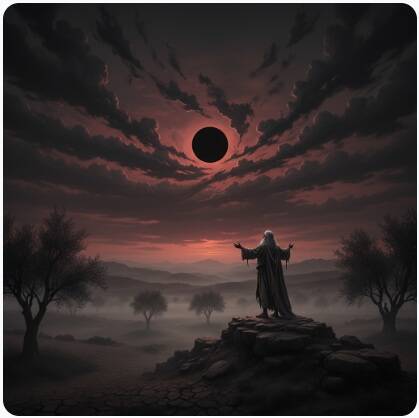
- The Signs of Death: At the time of the Savior's crucifixion in Jerusalem, the Americas experienced three days of intense darkness accompanied by catastrophic tempests, earthquakes, and fires that reshaped the face of the land (3 Nephi 8:5–23).
- The Voice from Heaven: Sometime after these destructions, a multitude of approximately 2,500 people gathered near the temple in the land of Bountiful. They heard a small, piercing voice from heaven three times. On the third attempt, they opened their ears and understood the voice of Heavenly Father declaring, "Behold my Beloved Son, in whom I am well pleased, in whom I have glorified my name—hear ye him" (3 Nephi 11:3–7).
The Personal Appearance and Individual Witness
- The Descent of the Savior: The people saw a Man descending out of heaven clothed in a white robe. He stood in their midst and announced, "Behold, I am Jesus Christ, whom the prophets testified shall come into the world" (3 Nephi 11:8–10).
- The Invitation to Touch: To provide an irrefutable knowledge of His physical Resurrection, the Savior invited the entire multitude to come forward "one by one." He instructed them to thrust their hands into His side and feel the prints of the nails in His hands and feet (3 Nephi 11:14–15).
- The Outcome of the Witness: After every individual had gained this certain knowledge, they cried out with one accord, "Hosanna! Blessed be the name of the Most High God!" and fell down at His feet to worship Him (3 Nephi 11:16–17).
Establishing His Church and Doctrine
- Authority and Ordinances: The Savior called Nephi and eleven others, giving them the power and authority to baptize. He provided precise instructions on the manner of baptism to ensure there would be no more disputations among the people (3 Nephi 11:21–27).
- The Doctrine of Christ: He taught that His doctrine is for all men to repent, believe in Him, and be baptized to receive the Holy Ghost. He explicitly warned that "the spirit of contention is not of me, but is of the devil" (3 Nephi 11:29).
- Ministry of Compassion: During His visit, the Savior healed all who were "afflicted in any manner," blessed their little children one by one, and prayed for them with such power that the heavens opened and angels descended to minister to the families (3 Nephi 17).
The visit that culminated in the almost two‑century era of “perfect peace and unity” (4 Nephi 1:15) still haunts the imagination of those who have read the record with a sober heart. For a time the peoples of the New World lived without contention, their souls suffused with the love of God that dwelt so deeply within them that no quarrel could stir the air. Yet the very perfection of that epoch is a source of quiet sorrow today, for it lies behind a veil of centuries, its brilliance dimmed by the skeptical eyes of modern criticism. To dismiss the passage as a mere allegory is to turn away from the stark, physical, and doctrinal detail the Book of Mormon offers concerning the literal Resurrection of the Savior—details that were foretold long before His birth and that would later become the measuring sticks by which the signs of His death and rising were recognized.
The prophecies embedded in the text are not nebulous hopes but concrete, measurable markers: the precise timing of the Messiah’s ministry, the manner of His suffering, the exact circumstances of His burial, and the unmistakable evidence of a resurrected body. The historical record of Christ's crucifixion and the postmortem testimonies that followed align with these predictions, recorded centuries earlier. When critics reduce the entire narrative to symbolism, they overlook the palpable “physical clarity” that the witnesses in the record describe—the empty tomb, the wound in the side that could be touched, and the transformation of the dead into living witnesses.
In the melancholy that shadows our present age—where division often thrives and the love of God seems a faint echo—there remains a quiet, aching hope that the same divine love that once bound an entire people in harmonious unity might yet be reclaimed. The lament for a lost golden age is not merely nostalgia; it is a reminder that the doctrines and prophecies that once ushered in an era of peace still possess the power to awaken hearts. To ignore them is to deny the very evidence that the Book of Mormon presents for the literal Resurrection, and in doing so, to forfeit the possibility that a similar peace might, once again, settle upon the earth.
- Lehi’s Knowledge of the Messiah: Around 600 B.C., Lehi prophesied that the Messiah would be "slain for the sins of the world" and would "rise from the dead" (1 Nephi 10:11). This established the foundational knowledge that the Savior's mission was centered on the Resurrection.
- Nephi’s Vision of the Crucifixion: Nephi was shown in vision the Savior "lifted up upon the cross and slain for the sins of the world" (1 Nephi 11:33). He also prophesied that after the Savior was laid in a sepulchre for three days, He would rise from the dead with "healing in his wings" (2 Nephi 25:13).
- Abinadi’s Testimony on the Resurrection: Speaking before King Noah, Abinadi taught that "the graves shall have no victory, and that the sting of death should be swallowed up in Christ" (Mosiah 16:8). He clarified the knowledge that because Christ broke the bands of death, all mankind would gain the power of resurrection.
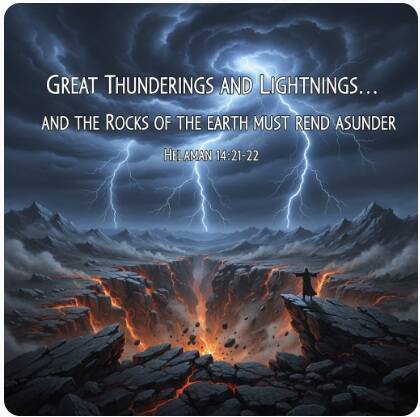
- Samuel the Lamanite’s Specific Signs: Roughly six years before the Savior's birth, Samuel prophesied the exact physical phenomena that would occur at the time of the Savior's death. He stated that "the sun shall be darkened and refuse to give his light unto you; and also the moon and the stars" for the space of three days (Helaman 14:20).
- Geological and Social Upheaval: Samuel further predicted that there would be "great thunderings and lightnings" and that "the rocks of the earth must rend asunder" (Helaman 14:21–22). He taught that these signs were given to inform people that the day of redemption had come.
The fulfillment of these prophecies, as recorded in 3 Nephi, serves to silence any Criticaster who claims the events were coincidental or naturalistic. The precision of the timeline and the nature of the destruction provided an undeniable witness that the Son of Heavenly Father had fulfilled His mortal ministry.
The necessity of a physical body of flesh and bones is fundamental to the knowledge of Heavenly Father’s plan. A resurrected body is not a shadow or a spirit, but a tangible, perfected vessel that allows for the full outcome of joy and progression.
- The Nature of Heavenly Father: We have the knowledge that "The Father has a body of flesh and bones as tangible as man’s" (D&C 130:22). Because Jesus Christ is the express image of His Father’s person, His physical Resurrection confirms that we are created in Their likeness.
- The Inseparable Union: The spirit and the body are the soul of man. True redemption requires the "restoration" of the physical frame. Without a body, a spirit cannot receive a "fulness of joy" (D&C 93:33). The Resurrection ensures that the spirit and body are "inseparably connected," never to be divided again.
- Victory Over the Fall: The Fall of Adam brought both spiritual and physical death. If the Resurrection were merely spiritual, the victory over death would be incomplete. The physical Resurrection of Jesus Christ provides the knowledge that every limb, joint, and hair of the head shall be restored to its "proper and perfect frame" (Alma 40:23).
- The Capacity for Eternal Progression: A physical body is required to exercise the powers of godhood and to inherit the kingdoms of glory. By possessing a glorified body, we are enabled to live in the presence of Heavenly Father and Jesus Christ eternally.
- Judgment and Accountability: The knowledge that we will stand before the bar of God in our physical bodies emphasizes the importance of how we treat our bodies during mortality, as our actions and choices will be evaluated in relation to our spiritual growth and adherence to divine principles. Our physical state in the Resurrection will reflect our faithfulness to the laws of Heavenly Father.
In the quiet ache of a world that often prefers the comfort of abstraction, the skeptic who lifts the spirit above the flesh or who reduces the glorious triumph of the Resurrection to a mere symbol is unknowingly turning his back on the most tangible invitation ever extended by the Savior: “Handle me, and see." The very words—plain, tactile, demanding contact—echo the stark reality that the Lord did not merely rise in a realm of ideas, but in a body that could be touched, bruised, and healed. That physical resurrection, gleaming in the aftermath of the crucifixion, stands as the ultimate testament that Heavenly Father’s design for His children is not an ethereal escape but a divine invitation to become like Him, body and spirit united in eternal perfection. When we reflect on that solemn, yet hopeful, invitation, a melancholy settles in, for each denied truth feels like a lost opportunity to partake in the tangible promise of glory.
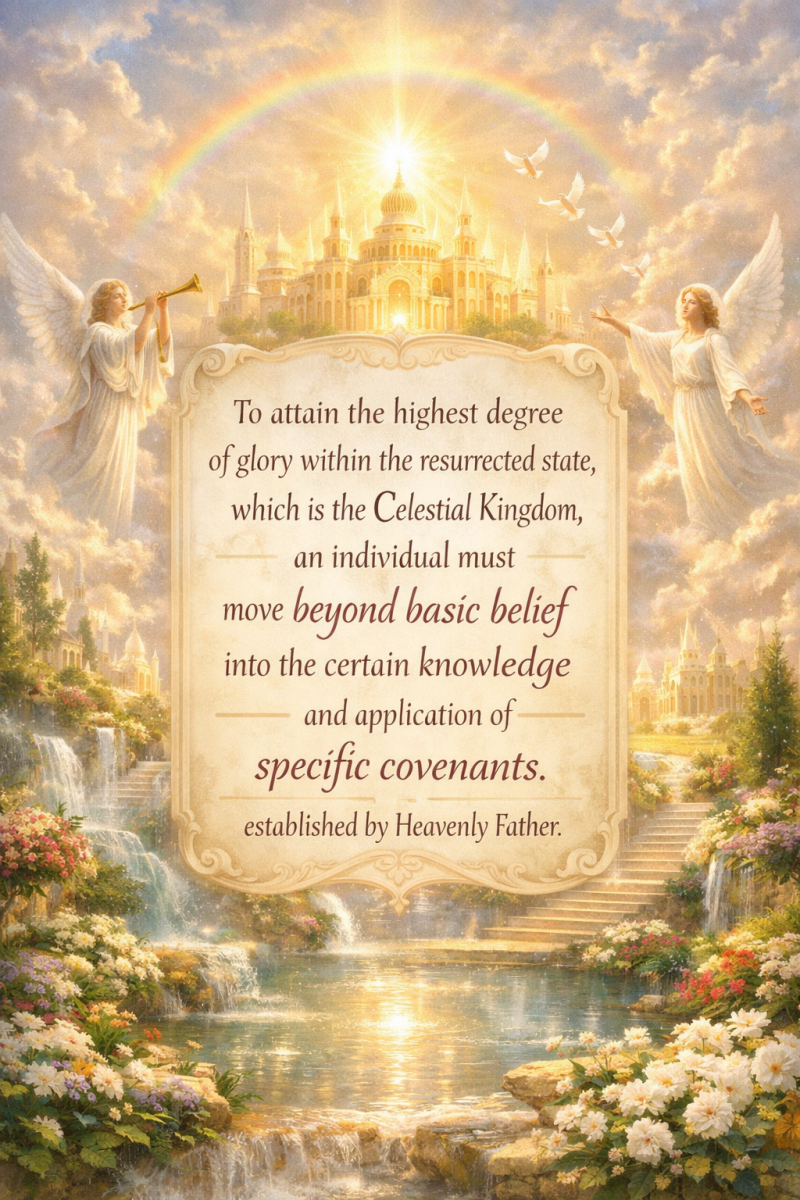
To reach the Celestial Kingdom, which is the highest level of glory in the resurrected state, one must go beyond the weak framework of simple belief. The path demands a certain knowledge that is forged in the fire of covenant‑keeping, a deliberate, heart‑deep application of the ordinances and promises that Heavenly Father has set before us. Only by embracing these covenants—baptism, the temple endowment, and the sealing of families—do we align ourselves with the very pattern of the resurrected Christ, whose body was made perfect and whose spirit never abandoned it. The mournful truth is that many drift, content with symbols, while the living, resurrected Christ beckons us to touch, to feel, and to become fully His likeness. In that yearning lies both the sorrow of missed chances and the quiet hope that, through faithful obedience, the physical and the divine may finally be reconciled in our own resurrected destiny.
- The Testimony of Jesus: One must receive the testimony of Jesus, believe in His name, and be baptized after the manner of His burial. This initial step provides the knowledge necessary to enter the path of discipleship (D&C 76:51).
- The Receipt of Covenants: It is required to receive the Holy Spirit of Promise and keep the commandments. This includes the knowledge that one must be "sealed by the Holy Spirit of promise, which the Father sheds forth upon all those who are just and true" (D&C 76:53).
- The New and Everlasting Covenant of Marriage: To obtain the highest part of the Celestial Kingdom, one must enter into the new and everlasting covenant of marriage. Without this specific covenant performed by proper authority, an individual "cannot have an increase" and remains a ministering servant rather than a joint heir with Christ (D&C 131:1–4).
- Overcoming by Faith: The outcome of the Celestial glory is reserved for those who "overcome by faith" and are "just men made perfect through Jesus the mediator of the new covenant" (D&C 76:69). This involves enduring to the end in full obedience to the laws of the gospel.
- The Church of the Firstborn: Those in the highest degree of glory are members of the Church of the Firstborn. They receive Heavenly Father’s fulness and His glory, becoming "gods, even the sons of God" (D&C 76:58).
In the quiet corridors of eternity, the promise of Exaltation glimmers like a sunrise that has waited a thousand ages to break the night. When the soul has endured the patient labors of obedience—baptism, the sealing of families, the sacrament of repentance, and the solemn covenant of temple ordinances—its resurrected body is destined to shine with the brilliance of the sun itself, a radiant testimony that the divine pattern has been fulfilled. But the road to that bright future is narrow, and the heart that has walked it knows the burden of each step, the sigh that came with every trial, and the quiet that follows the final sealing. The light that will one day enshrine the redeemed is made from the sadness of sacrifice, a reminder that glory always comes with a price.
It is a sorrowful irony that some Criticaster, clutching only the notion of “faith alone,” would dismiss these essential ordinances as superfluous. Their argument, thin as a winter breath, obscures the clear covenantal requirements the Gospel has set before those who yearn to stand in the immediate presence of the Heavenly Father. By ignoring the sacred rites that bind us to the divine, they deny the solemn poetry of the plan—a plan that calls for both belief and action, for hope and for the concrete expressions of that hope. The melancholy of those who have labored faithfully swells when such reductionist claims echo, for they betray not only a misunderstanding of doctrine but also a disregard for the tender, painstaking journey that makes Exaltation possible. In the end, the mournful contemplation of this dissonance only deepens the yearning for a world that will honor the full, luminous covenant and allow the resurrected bodies of the faithful to reflect the sun’s everlasting light.
Add comment
Comments