Abraham's Inheritance
Abraham was promised that the Melchizedek Priesthood would continue through his lineage, giving his descendants the right to administer the Gospel and its saving ordinances to all nations.
- Chapter 24: The Covenant of Marriage. Abraham sends his servant to find a wife for Isaac among his kindred. This highlights that temple marriage is essential for obtaining the full blessings of the Abrahamic covenant.
- Chapter 25: Valuing the Birthright. Esau sells his birthright to Jacob for a "mess of pottage. "It teaches that we must value eternal blessings over immediate worldly desires.
- Chapter 26: Obedience and Peace. The Lord renews the Abrahamic covenant with Isaac because of his faithfulness. Instead of going to war with his neighbors, Isaac chooses peace and reconciliation.
- Chapter 27: The Prophetic Blessing. Jacob receives the birthright blessing intended for him by prophecy. LDS manuals suggest this account may lack details but confirm the blessing went to the one the Lord intended.
- Chapter 28: Jacob’s Ladder. Fleeing from Esau, Jacob has a vision of a ladder reaching to heaven. President Marion G. Romney taught that the rungs represent the covenants and ordinances we must climb to return to God.
- Chapter 29: Integrity and Hard Work. Jacob works 14 years to marry Rachel and Leah. This portion illustrates the importance of keeping commitments and sacrificing for covenant relationships.
- Chapters 30–31: Temporal and Spiritual Blessings. Despite Laban's deception, the Lord prospers Jacob temporally and spiritually. Jacob eventually obeys God’s command to return to his homeland.
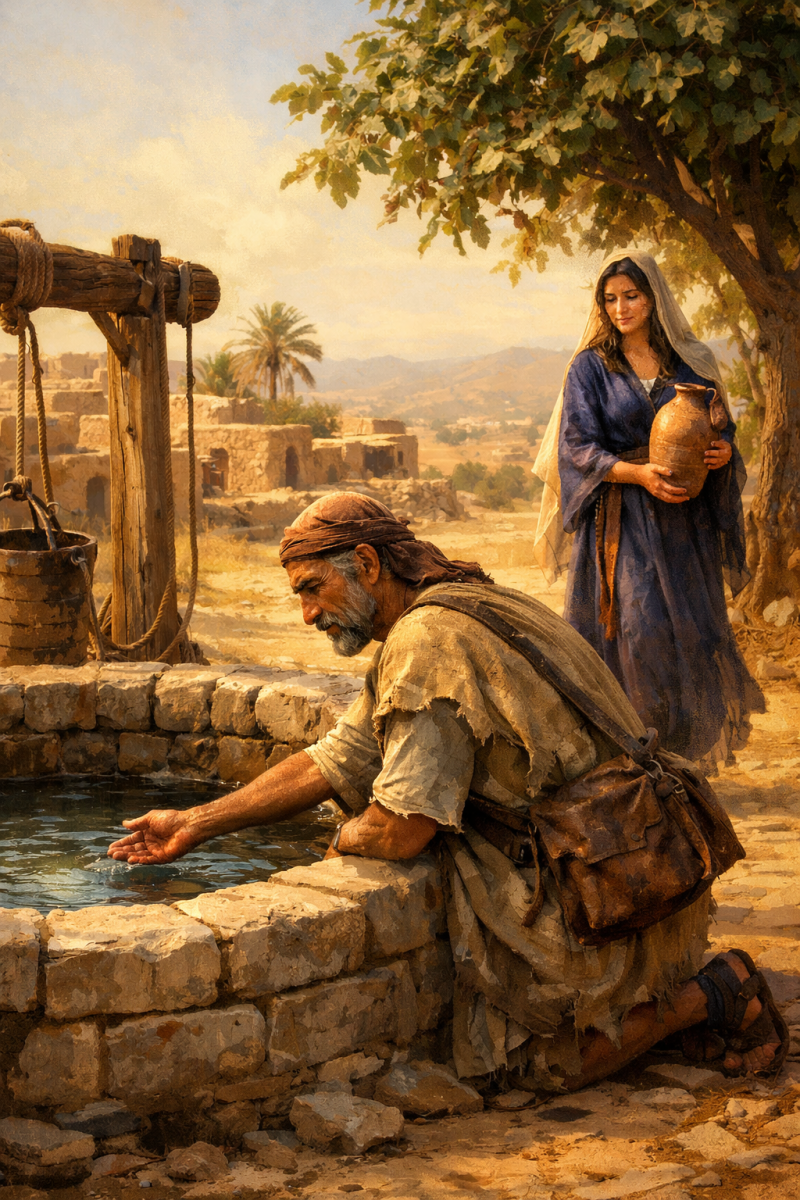
“The Well of Promise”
- Chapter 32: The Sacred Wrestle. Jacob wrestles all night for a blessing. His name is changed to Israel, meaning "let God prevail," symbolizing his personal transformation and willingness to put God first.
- Chapter 33: Forgiveness and Reconciliation. Jacob and Esau reunite in peace. This chapter demonstrates that keeping our covenants helps us meet life's challenges and heal family relationships.
- Marriage in the Covenant: Abraham prioritized finding a wife for Isaac from his kindred rather than the Canaanites to ensure the Abrahamic Covenant could continue. This practice parallels the modern emphasis on Temple Marriage.
- Seeking Divine Guidance: Abraham’s servant (often identified as Eliezer) relied on specific prayer to find the right person. This teaches that the Lord will guide us in our most important life decisions when we seek Him.
- The Character of Rebekah: Rebekah’s willingness to go the "extra mile" (watering ten thirsty camels was a massive task) displayed her Christlike attributes of service and kindness.
- Individual Agency: When asked if she would go with the servant to marry a man she had never met, Rebekah replied, "I will go" (Genesis 24:58). This echoes Nephi's commitment (1 Nephi 3:7) and emphasizes that spiritual blessings require our active choice
I was instantly drawn into one of the Bible’s most tender love stories—a story that feels almost cinematic in its detail yet timeless in its lessons. The chapter begins with Abraham, now an elderly patriarch, entrusting his most prized possession—his son Isaac’s future wife—to his most trusted servant. I love how the servant’s mission is framed as a prayerful quest: “May the Lord, the God of my master Abraham, grant me success today and show steadfast love to my master” (24:12). From there, the narrative unfolds with the servant’s earnest waiting at a well, a setting that feels both ordinary and extraordinary because it becomes the backdrop for divine orchestration. When Rebekah appears, offering water not only for him but also for his camels, I can’t help but smile at the subtle yet profound way her character shines through simple hospitality.
What strikes me most about Genesis 24 is how it weaves together faith, providence, and human agency. The servant doesn’t just rely on luck; he actively seeks God’s sign—asking that the woman who offers him a drink be the one destined for Isaac. And when Rebekah steps forward, the story seems to whisper that God’s plans often materialize in the most ordinary moments of kindness. The chapter ends with joyous celebrations, the merging of two families, and a poignant reminder that love, when rooted in trust and guided by faith, can bridge generations. Reading it, I feel both humbled by the ancient characters’ devotion and encouraged that, even today, we can find our own “well moments” where preparation meets destiny.
- Agency vs. Passivity in Covenants:
- The Concept: Abraham received enormous promises from God, but he did not wait passively for them to manifest. He proactively sent his servant 1,200 miles to ensure the covenant continued.
- Discussion: "How do we balance 'trusting in the Lord' with the need to take initiative in our own lives and families?"
- The Stewardship of the Servant:
- The Concept: The servant (often identified as Eliezer) shows a profound model of faithful stewardship. His prayer was not for personal gain but for "kindness to my master Abraham" (v. 12).
- Discussion: "In our callings or family roles, how can we model the servant’s selfless approach to fulfilling a responsibility that isn't for our benefit?"
- Signs vs. Spiritual Discernment:
- The Concept: The servant asked for a very specific sign (v. 14). While we are often cautioned against "sign-seeking," the Come, Follow Me manual notes he was following an impression and looking for specific character traits (kindness and industry) rather than just a miracle.
- Discussion: "How can we distinguish between asking for a 'sign' out of doubt and asking for 'guidance' through specific circumstances?"
- Rebekah’s Decisive Agency:
- The Concept: When her family suggested waiting ten days, Rebekah’s choice was immediate: "I will go" (v. 58). This mirrors the courage required to follow a spiritual prompting even when it disrupts comfort.
- Discussion: "Rebekah left everything she knew to join a covenant family she had never met. When has the Lord asked you to 'leave' a comfortable part of your life to fulfill a higher purpose?"
- Insight: Just as Abraham knew the Abrahamic Covenant depended on Isaac’s marriage, we learn that the highest degree of the Celestial Kingdom is only available through the "new and everlasting covenant of marriage."
- Insight: We are told to ask in the Spirit for that which is "expedient." The servant’s prayer was focused on fulfilling his stewardship.
- Insight: The Lord expects us to be "anxiously engaged" and do things of our "own free will." Rebekah’s character was revealed by her initiative, not just her obedience.
- Insight: "What profit is there for a man if a gift is bestowed upon him but he does not receive it?" Rebekah received the gift of the covenant because she was willing to act and "receive" it immediately.
- Insight: The New and Everlasting Covenant promises a "continuation of the seeds forever and ever."
Add comment
Comments