The Finale of the Joseph Narrative and Its Lessons
Genesis 42‑50: The last nine chapters of Genesis shift the focus from the patriarchal origins of Israel to the dramatic climax of Joseph’s life in Egypt. After a severe famine strikes Canaan, Jacob sends his sons to buy grain (Gen 42), where they encounter the man who once sold them into slavery—now a powerful Egyptian official, Joseph, who has risen to second‑in‑command. The brothers, unaware of his identity, are tested through a series of humiliating demands: they must bring their youngest brother, Benjamin, and a silver cup hidden in a sack (Gen 44‑45).
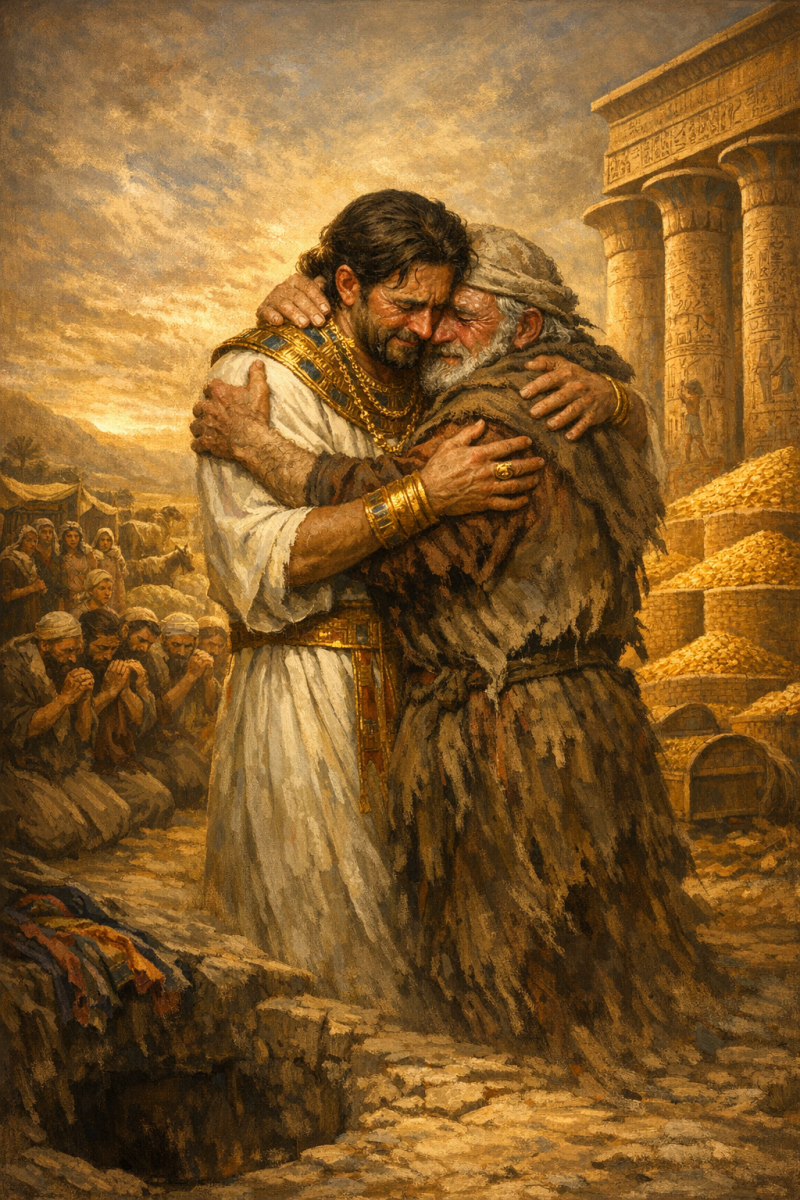
Upon Joseph's revelation, the family's reunion is characterized by tears, forgiveness, and a profound sense of divine providence. Jacob’s migration to Egypt (Gen 46) secures the survival of Israel’s ancestors, and the narrative concludes with Jacob’s blessing of his sons (Gen 49) and Joseph’s own death speech, affirming that “the Lord will surely come to the aid of the Israelites” (Gen 50:24‑25).
Genesis 42: The First Test
Driven by famine, ten of Jacob's sons go to Egypt to buy grain. Joseph recognizes his brothers, but they do not recognize him in his Egyptian Vizier's attire. He tests them by accusing them of being spies and imprisons Simeon, demanding they return with their youngest brother, Benjamin, to prove their honesty.
Genesis 43: The Second Journey
As the famine worsens, Jacob reluctantly allows Benjamin to go to Egypt under Judah’s personal guarantee of safety. Upon arrival, Joseph hosts a banquet for them. The sight of Benjamin moves him so deeply that he must leave the room to weep in private before seating them according to birth order.
Genesis 44: The Silver Cup
To test if his brothers have truly changed, Joseph plants a silver cup in Benjamin’s sack. When the brothers discover it, they return in despair. Judah offers himself as a slave in Benjamin’s place, proving he is no longer the man who suggested selling Joseph years earlier.
Genesis 45: Seeing their repentance, Joseph reveals his identity in an emotional outburst. He tells them not to be angry with themselves, explaining that God sent him ahead to preserve life. Pharaoh invites the entire family to relocate to Egypt.
Genesis 46: The Migration to Egypt
Jacob (Israel) receives a vision from God at Beersheba encouraging him to move. The text lists the 70 family members who settled in the fertile land of Goshen. Joseph and Jacob have a tearful reunion after twenty years of separation.
Genesis 47: Settlement and Famine Management
Jacob meets and blesses Pharaoh. As the famine continues, Joseph consolidates the wealth and land of Egypt for Pharaoh. Before he dies, Jacob makes Joseph swear to bury him in the Promised Land (Canaan), not in Egypt.
Genesis 48: Jacob’s Final Blessing
An aging, nearly blind Jacob adopts Joseph’s two sons, Ephraim and Manasseh. In a prophetic act, he crosses his hands to give the younger son, Ephraim, the greater blessing, continuing the theme of the younger surpassing the older.
Genesis 49: Prophecy for the Twelve Tribes
Jacob gathers his twelve sons on his deathbed to deliver prophetic blessings and rebukes. He identifies Judah as the one from whom the "scepter" (the Messiah) will come and Joseph as a "fruitful bough." Jacob then passes away.
Genesis 50: The End of an Era
The book concludes with Jacob’s massive funeral procession to Canaan. After the burial, the brothers fear Joseph will finally take revenge. Joseph famously responds, "You intended to harm me, but God intended it for good." At the age of 110, Joseph passes away, instructing the future Exodus to carry his bones out of Egypt.
The Famine and the Secret (Chapters 42–43)
- Genesis 42: Facing starvation, Jacob sends his ten eldest sons to Egypt. They bow to Joseph without recognizing him. Joseph tests them by imprisoning Simeon and demanding they bring their youngest brother, Benjamin, to prove they aren't spies.
- Genesis 43: The famine persists. Judah guarantees Benjamin’s safety, and the brothers return to Egypt with gifts. Joseph is overwhelmed with emotion upon seeing Benjamin and hosts a feast where he seats them in chronological age order, baffling them.
The Transformation and Reveal (Chapters 44–45)
- Genesis 44: Joseph performs a final "sting operation" by framing Benjamin for the theft of a silver cup. When Joseph threatens to enslave Benjamin, Judah offers his life instead—proving the brothers are no longer the men who sold Joseph.
- Genesis 45: Joseph reveals his identity in an emotional outburst. He tells his brothers that their betrayal was actually God's providence to save lives during the famine. Pharaoh invites the family to settle in Egypt.
The Migration and Prosperity (Chapters 46–47)
- Genesis 46: Jacob moves his entire household (70 people) to Egypt after God encourages him in a vision. He has a tearful reunion with Joseph after twenty years apart.
- Genesis 47: The family settles in the fertile land of Goshen. While Egypt falls into poverty due to the famine, Joseph manages the crisis to increase Pharaoh’s wealth. An aging Jacob makes Joseph swear to bury him in Canaan.
The Legacy and Death (Chapters 48–50)
- Genesis 48: Jacob adopts Joseph’s sons, Ephraim and Manasseh. He prophetically blesses the younger (Ephraim) over the older, a recurring theme in Genesis.
- Genesis 49: On his deathbed, Jacob gathers his twelve sons and delivers prophetic blessings. He identifies Judah as the royal line from which the "scepter" (Messiah) will eventually come.
- Genesis 50: Jacob is buried in Canaan with great mourning. The brothers fear Joseph will now retaliate, but he famously responds, "You intended to harm me, but God intended it for good." The book ends with Joseph’s death and his request to be carried home during the future Exodus.
What I Learned from Genesis 42–50
Genesis 42–50 has made a lasting impression on me. It is not only a story of betrayal and victory but also a strong reminder of God's faithfulness and the power of forgiveness. Joseph's journey taught me that God can transform pain into purpose, starting from when his brothers sold him into slavery and leading to his rise as Egypt's second-in-command. Even when Joseph’s brothers wronged him, he chose grace over revenge, declaring, “You meant evil against me, but God meant it for good” (Genesis 50:20). That taught me that our struggles, no matter how painful, might be part of a bigger plan we can’t yet see.
Another lesson I took away is the courage it takes to trust God in uncertainty. Joseph endured years of hardship—slavery, imprisonment, loneliness—but kept doing his best in every situation. That perseverance, paired with integrity, opened doors for him to impact countless lives. It reminded me that God often uses our darkest seasons to prepare us for moments where we can bless others.
Lastly, this story revealed the beauty of reconciliation. When Joseph finally reunited with his brothers, he didn’t dwell on the past but focused on restoring relationships. It challenged me to consider how I handle conflicts: Will I hold grudges, or will I, like Joseph, choose mercy and healing? Genesis 42–50 isn’t just an ancient tale; it’s a timeless encouragement to forgive freely, trust deeply, and believe that God can write a beautiful ending to even the messiest chapters of our lives.
REPLIES
Add comment
Comments