The Foundations of the Abraham Narrative
In Genesis 12 God summons Abram from the familiar confines of Ur-Kalḫa and Haran to “go forth from your country, your people, and your father’s house” (12:1). The call is accompanied by a remarkable promise: a mighty nation will arise from Abram, he will be blessed, his name will become a source of blessing, and through him all the families of the earth will be redeemed. Abram obeys, taking his wife Sarai, his nephew Lot, and every possession he owns, and he sets out for the land of Canaan, which God designates as an “everlasting possession” (12:7). The journey is marked by cycles of famine, divine rescue, and human frailty—Abram’s sojourn in Egypt (12:10‑20), his rescue of Lot from the kings of Sodom and Gomorrah (14), and the troubling episode at Hebron where he lies about Sarai’s identity (17).
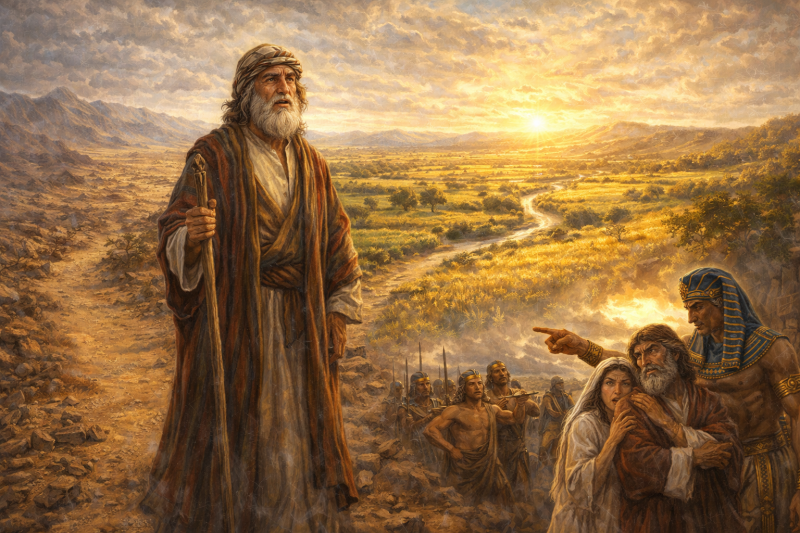
Genesis 15 further cements the covenant. God appears in a vision, reassures Abram of an heir despite his childlessness, and formalizes the promise through a solemn rite in which a smoking firepot and a flaming torch pass between divided animal halves. The covenant’s central stipulation is that Abram’s descendants will inherit the land from the river of Egypt to the Euphrates, a promise that anchors Israel’s later claim to Canaan.
The narrative reaches a pivotal transformation in chapters 16-17. Because Sarai remains childless, she offers her servant Hagar to Abram, resulting in the birth of Ishmael, yet the divine promise of “a son of your flesh” remains unfulfilled. At the age of ninety-nine, Abram receives a new name—Abraham, “father of many nations”—and Sarai becomes Sarah, “princess.” God expands the covenant to include an explicit sign: circumcision. Every male of Abraham’s household, including the eight‑day‑old Ishmael, is to be circumcised as a perpetual reminder of the covenantal relationship (17:10‑14). The passage concludes with the astonishing promise that Sarah, despite her advanced age, will bear a son, Isaac, through whom the covenant will be perpetuated.
Thus, Genesis 12–17 (or “Abraham 1–2”) charts the evolution of a personal call into a universal covenant, intertwining themes of faith, obedience, and divine fidelity. It lays the theological groundwork for the Israelite identity, establishing Abraham as the archetypal “father of faith” whose experience of promise, testing, and covenantal sign shapes the entire biblical narrative that follows.
The Call and Covenant of Abraham: A Journey Through Genesis 12-17 and the Book of Abraham 1-2
In the biblical book of Genesis (chapters 12–17), the narrative of Abraham unfolds as a foundational story of faith and divine promise. God calls Abram (later named Abraham) to leave his homeland of Ur and journey to Canaan, promising to make him a mighty nation, bless him, and through him, bless all the earth (Genesis 12:1–3). This covenant, reaffirmed in chapters 15 and 17, centers on the promise of descendants and a land, sealed with the sign of circumcision. The chapters also depict Abraham’s trials, including his lie about Sarah to pharaoh (Genesis 12) and the birth of his son Ishmael with Hagar (Genesis 16). These stories underscore themes of faith, divine provision, and the tension between human effort and God’s timing.
The Book of Abraham (chapters 1–2), which is part of the LDS (Latter-day Saint) canon, looks at these events from a different religious and literary point of view. Here, Abraham’s life in Ur is portrayed as a struggle against idolatry and injustice, with his father Terah and others conspiring to harm him for his righteousness. Abraham’s migration to Haran and Egypt mirrors the Genesis account but adds details about his dealings with pharaoh, who, like in the biblical story, takes Sarah. However, the Book of Abraham emphasizes Abraham’s moral agency and his prophetic role, highlighting his covenantal identity and the stakes of preserving the line of promise. It also includes a vision of the cosmos, underscoring the eternal nature of Abraham’s covenant.
While both texts center on Abraham’s call and covenant with God, the Book of Abraham (revealed by Joseph Smith) provides additional theological depth and cultural context, reflecting LDS teachings on the pre-existence of Abraham, the importance of patriarchal lineage, and the interplay between divine law and human responsibility. These accounts, though distinct in narrative and purpose, collectively illuminate Abraham’s legacy as a man of faith and a key figure in scriptural traditions spanning millennia.
As I've been reading through Genesis 12–17 and the corresponding passages in Abraham 1–2, I’ve felt truly inspired by the story of Abraham. It’s amazing to walk with him in spirit as he hears God’s call to leave everything familiar—his home, his family, his comfort—and step into the unknown, trusting that God has a greater plan. I love how personal this journey feels—like it’s not just ancient history, but a reminder that faith is something each of us can live out in our own lives. Through moments of laughter (like when Sarah hears she’ll have a child in old age!), tests of obedience (that heart-wrenching test on Mount Moriah), and sacred covenants sealed with stars and circumcision, I see a man growing closer to God, one faithful step at a time. What speaks most to me is God’s faithfulness in return—never leaving Abraham, always reaffirming promises, always present. It makes me ask myself: Where is God calling me to trust Him more? And honestly, that’s a conversation worth continuing every day.

Share your thoughts, comments, and ideas in the comment area. I look forward to how this study has enriched you.
Did you know?
Vitalizing Drinks in the Age of Abraham
In the time of Abraham (c. 2000–1800 BCE),
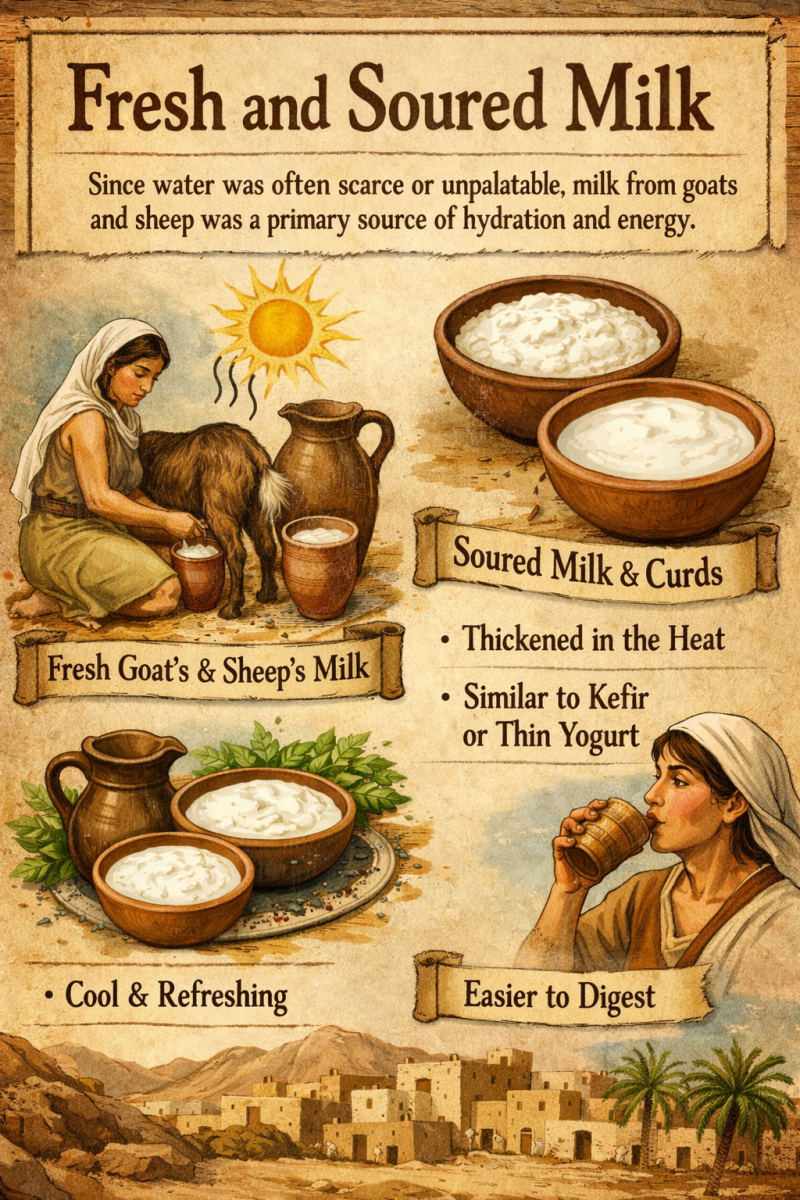
Milk that is fresh and soured: Since water was often scarce or unpalatable, milk from goats and sheep was a primary source of hydration and energy. In the hot climate, fresh milk quickly thickened into sour milk or curds (similar to kefir or thin yogurt), which was considered even more refreshing and easier to digest
Add comment
Comments