The passages from Genesis 3–4 and Moses 4–5 describe the Fall of Adam and Eve and the early experiences of their children, Cain and Abel. In these chapters, Adam and Eve partake of the fruit of the tree of knowledge of good and evil, leading to their expulsion from the Garden of Eden. This act brings physical and spiritual death into the world but also makes possible human growth, agency, and the plan of salvation.


Necessary step in God's plan

As a child of the Heavenly Father, studying Genesis 3 has reshaped how I view the complexities of choice, growth, and divine love. The story of Adam and Eve’s Fall is often considered a tale of disobedience, but Genesis teaches that it was a necessary step in God’s plan for human happiness. Through the Fall, Eve’s courage to partake of the forbidden fruit brought mortality into the world—physical death and the opportunity to learn and grow in a world of agency. The Lord’s Word stressed that without these experiences, we could not progress toward becoming like Him (2 Nephi 2:25).
Teachings emphasize that God permitted the Fall out of love, not punishment. The challenges of life—struggle, sorrow, and even death—are temporary and are overcome through Jesus Christ’s Atonement. Eve’s choice, though costly, opened the way for the Atonement to heal the effects of sin and death (Mosiah 3:19). Her role is celebrated as pivotal, not tragic; she and Adam became the “first parents” who set humanity on a path to eternal life.
Studying this story has deepened my appreciation for the balance in God’s plan: we must choose our actions (agency), but His grace ensures we can triumph over our mistakes. For followers grappling with life’s difficulties, Genesis 3 reminds me that even in our struggles, there is purpose—and the promise of redemption through Christ.
The Fall as a Divine Plan
In the scriptural account of Genesis 3, Adam and Eve’s decision to partake of the forbidden fruit marks a pivotal moment in the plan of salvation. While traditional narratives often emphasize the Fall as a tragic loss of innocence, through profound study, teachings reframe this event as a purposeful and merciful act within God’s eternal design. According to the Pearl of Great Price, particularly Moses 4, Adam and Eve were forewarned by God himself of the consequences of eating the fruit—yet their choice to do so was a deliberate step toward mortality, enabling them to gain "eyes to see, and ears to hear" the distinction between righteousness and evil (Moses 6:55). This knowledge, necessary for human growth and agency, allowed them to choose freely, a fundamental aspect of God’s plan. The LDS model emphasizes that the Fall was not a punishment but a prerequisite for earthly existence, birthing the capacity for joy, love, and redemption.
Leaders like Elder Bruce R. McConkie clarified that the Fall brought an "eternal happiness" as it permitted "children to come to earth" and progress toward eternal life (Doctrines of Salvation, 1:27–28). Rather than viewing the serpent as a malevolent figure, doctrine highlights the role of choice, noting that Adam and Eve’s actions were not attributable to the tempter but to their exercise of agency. Their expulsion from Eden, though seemingly a hardship, was necessary to transition to the next phase of their journey—labor, family, and the eventual Atonement of Jesus Christ. As Lehi taught in the Book of Mormon, the Fall and Atonement are intertwined, "for it must needs be that there is an opposition in all things… that [God’s children] might be redeemed" (2 Nephi 2:11).
Thus, the interpretation of Genesis 3 elevates the Fall as a sacred, intentional step in humanity’s spiritual progression, underscoring the interplay of free will, divine mercy, and the redemptive power of Christ’s atonement. It is a testament to the Creator’s wisdom, transforming what might be considered a failure into a cornerstone of His grand plan for all His children.
When I read Moses 4, I am struck by its vivid portrayal of Adam’s early trials and the tender, yet purposeful, counsel the Lord gives him. The chapter opens with a tender scene of Adam and Eve’s exile, not as a final condemnation but as a catalyst for growth. God reminds Adam that the “hard work of toil” is not a curse but a divine invitation to develop patience, humility, and reliance on divine help. He also promises that the “seed of the woman” will crush the serpent’s head, a prophetic promise that extends beyond a single lineage to every soul who chooses righteousness.
What this means for me today is simple yet powerful: life’s hardships are not random penalties but deliberate opportunities to refine my character. When I face an overwhelming workload, a broken relationship, or a health setback, I can view them as the “toil” meant to teach perseverance and dependence on the Savior. Moreover, the promise that “the seed of the woman” will triumph reminds me that each small act of faith contributes to a larger, victorious tapestry. By embracing my trials with gratitude and trusting that God’s long‑term plan includes my redemption, I can align my daily choices with the divine direction offered in Moses 4, turning every difficulty into a stepping‑stone toward greater spiritual maturity.
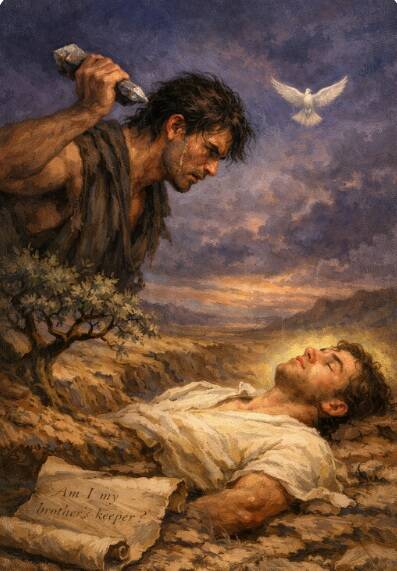


The Heavenly Father’s reaction to Cain’s murder of Abel is a profound expression of divine anguish and justice. In the biblical account, God’s sorrow manifests as quiet judgment—He condemns Cain for his jealousy and violence, declaring, “Your sin is too great to be atoned” (Genesis 4).
A Lesson in Obedience, Sin, and God’s Mercy
The story of Cain and Abel in Genesis 4 is a foundational narrative in the Bible, offering profound lessons that resonate across time. For Christians, this story is not only a cautionary tale but also a vital illustration of divine principles such as obedience, faith, and the life-changing power of repentance. Embedded within this ancient account are teachings that underscore the human condition, the consequences of sin, and the boundless mercy of God—we gain more profound insight into its enduring significance and its relevance for modern discipleship.
The Biblical Narrative and Christians Interpretation
Genesis 4 tells the story of the first violent act in human history: Cain, the firstborn son of Adam and Eve, kills his younger brother Abel in a fit of rage after God accepts Abel's animal sacrifice but not Cain's offering of produce. Teachings emphasize that this story, though brief in the Bible, carries layers of meaning. Christians view the Bible as “the word of God as far as it is translated correctly,” and the Genesis 4 account is considered divinely inspired to teach moral and spiritual truths. Through additional revelations, such as those in the Book of Moses (part of the Joseph Smith Translation of the Bible), scripture expands on this narrative. For instance, the Book of Moses clarifies that God’s rejection of Cain’s offering was not a demonstration of partiality but an invitation to improve. The Lord said to Cain, “Why is thy countenance fallen? If thou doest well, thou shalt be accepted. And if thou doest not well, sin lieth at the door” (Moses 5:23). This exchange illustrates God’s desire to teach and guide humanity, a principle central to LDS doctrine.
The Lesson of Obedience and Faith
A core lesson from Genesis 4 is the importance of obedience and faith. Abel’s sacrifice, which God accepted, is understood in teachings as a blood offering that symbolized the future Atonement of Jesus Christ. This foreshadowing connects Abel’s act to the broader knowledge that all righteous sacrifices and ordinances are testaments of faith in Christ’s redemptive work. Cain’s offering, though sincere, failed because it lacked the symbolic acknowledgment of humanity’s need for a Savior. As Apostle Bruce R. McConkie explained, “The first sacrifice was made by Abel; it was a blood sacrifice, an acknowledgment that under the law of God, the life of a creature must be given for a sin” (Doctrinal New Testament Commentary). This perspective highlights that faith is not merely about effort but about aligning one’s actions with divine standards. Cain’s anger and jealousy (Genesis 4:5–6) reflect a failure to recognize his dependence on God’s grace, a lesson that resonates with teachings on humility and submission to divine will.
The Peril of Sin and the Necessity of Repentance
The story of Cain and Abel also serves as a stark warning against the destructive power of sin. Leaders often emphasize that sin, even in its smallest forms, can lead to moral decay. President Spencer W. Kimball taught that “sin is not trivial; it is serious, and it must be heeded,” a truth demonstrated by Cain’s descent from resentment to murder. The view of repentance—active and transformative—is underscored here. After his crime, Cain is not rejected by God but is given a chance to live within a covenant to correct his behavior. The mark of Cain, a symbol of his guilt, becomes a sign of God’s enduring relationship with him, illustrating that redemption is always possible for those who seek it with contrite hearts. This mirrors the emphasis on Christ’s Atonement as the ultimate remedy for all sin and suffering.
Theological and Historical Significance
Genesis 4 is critical in the biblical narrative because it marks the first human transgression after the Fall of Adam and Eve, showing how sin escalates and how God responds with both justice and mercy. This story establishes foundational truths about the human condition: that we are all susceptible to spiritual and moral challenges, but with God’s help, we can overcome them. The contrast between Cain’s lineage (marked by rebellion) and Seth’s line (focused on righteousness) sets the stage for later biblical narratives and the eventual coming of Christ. Scripture teaches that “the work and the glory of God is to bring to pass the immortality and eternal life of man” (Moses 1:39), and Genesis 4 reminds us that this divine purpose requires vigilance against sin and a commitment to righteousness.
A Call to Reflection and Action
The story of Cain and Abel is a timeless reminder to examine their lives for pride, resentment, or complacency. It challenges them to offer their own “sacrifices”—acts of faith, charity, and service—through the power of Christ’s Atonement. As Elder M. Russell Ballard of the Quorum of the Twelve Apostles noted, “We must never be like Cain, who failed to humble himself and was consumed by jealousy.” By internalizing the lessons of Genesis 4, Christians are called to foster unity, seek repentance, and trust in God’s redemptive plan. This story, though ancient, remains a beacon of divine truth, guiding us toward a more Christlike life.
Lessons from Moses 5: Navigating Life’s Challenges with Faith and Agency
Studying Moses 5 has reshaped how I approach my own choices and responsibilities. This chapter, which details Adam and Eve’s life after the Fall, their children, and the early struggles of faith, offers profound guidance for navigating modern complexities. First, it teaches me that agency—our power to choose—is both a gift and a weighty responsibility. Cain’s jealousy and violent act remind me that decisions rooted in pride or resentment harm not only others but also our own spiritual growth. Today, I strive to use my agency to build, not destroy, recognizing that every interaction is an opportunity to reflect love or division.
The story of Cain and Abel also underscores the importance of intention over mere effort. Abel offered “the firstlings of his flocks,” while Cain gave “of the fruit of the earth” without the same spirit of sacrifice (Moses 5:6–7). This teaches me that actions without heart—whether in relationships, work, or service—fall short of what matters most. In a world obsessed with productivity, I’m learning to ask: Am I giving my best, or am I simply going through the motions?
Finally, Adam and Eve’s repentance and resilience inspire me. Though they faced pain and hardship, they continued to teach their children, planting seeds of faith (Moses 5:37–40). Their example reminds me that setbacks aren’t endpoints. When I stumble, I can choose to adapt, grow, and press forward. Moses 5 challenges me to live with purpose—to honor my agency, cultivate genuine intent, and trust that even after our “falls,” we can still build something meaningful.
Overview
Genesis 3 recounts humanity’s fall: the serpent tempts Eve, she and Adam eat the forbidden fruit, and God pronounces curses on the serpent, the woman, and the man before expelling them from Eden. Genesis 4 follows the first family drama—Cain murders Abel, receives exile, and his line expands, while Lamech later boasts of killing. In the Pearl of Great Price, Moses 4 describes the premortal council, Lucifer’s rebellion, the war in heaven, and God’s plan for Adam and Eve. Moses 5 details their life after the transgression, the resulting hardships, and the birth of their children, including Cain, Abel, and Seth.
Add comment
Comments
You are doing a great job..I actually love how the LDS view Eve's transgression and you point that out. Whether or not she had an epiphany with her temptation, she chose to further mankind. And the fall does show just how much our Heavenly Father loves us
Keep up.the good work. I'll leave more intense discussion to Brent...lol